The Lowther Journal · 30 October 2026
No Loudspeaker for Old Men
Mike Blackmore on the Voigt Domestic Corner Horn of 1934, the loudspeaker he would put first on any list of speakers to hear.
Lowther Loudspeakers; guest feature by Mike Blackmore
Lowther Loudspeakers · 8 min read
“No Loudspeaker for Old Men”. Why you need to hear the Voigt Domestic Corner Horn before you die.
By Mike Blackmore, Voigt and Lowther aficionado
Sorry to Sound Macabre but It’s Halloween Time
I’m a bit of a fan of the book series “1001……..YOU MUST……..BEFORE YOU DIE”. I especially enjoy (and own) the editions featuring Classical Records, LPs and Whiskey. All throughly recommended and with subjects that are right up my Strasse. As I’m fast approaching my own final chapter these listing books seem all too poignant. The need to “do it” becomes a lot more urgent, depending (of course) on their subject matter! Too much Whiskey can be life threatening.
My 1001 Loudspeakers Edition
Now imagine a copy dedicated to loudspeakers you should hear before you die. What would be in your top 1001? I don’t think I could get past 100 let alone 1001, but I know which would be at the very top of my list. The most impressive and important loudspeaker (in my humble opinion) to grace a domestic environment. Yes the ancient and legendary Voigt Domestic Corner Horn (VDCH) which first appeared in 1934. Why would I choose this loudspeaker? Well the list of reasons is impressive.
The Loudspeaker Only Voigt Could Conceive and Design
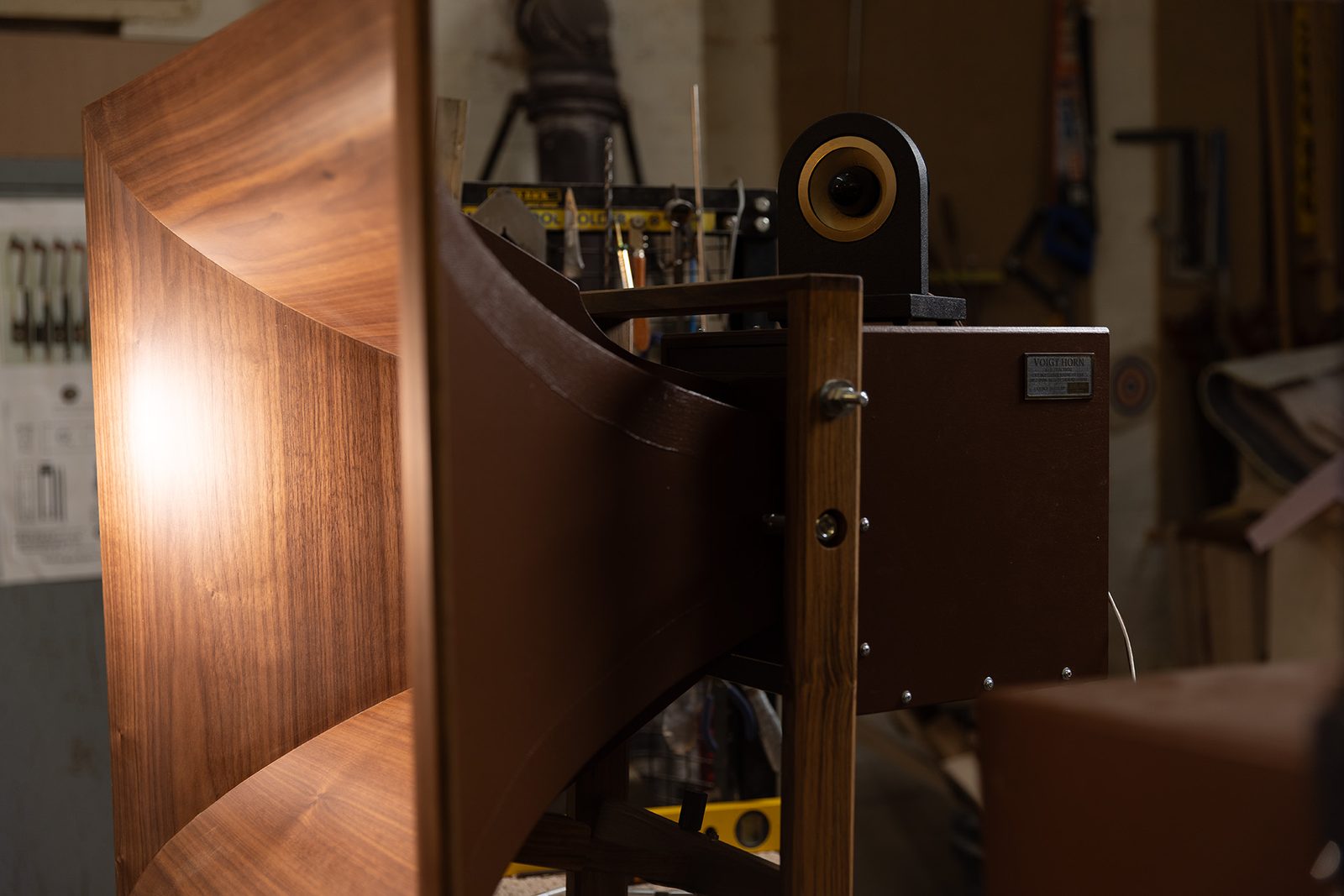
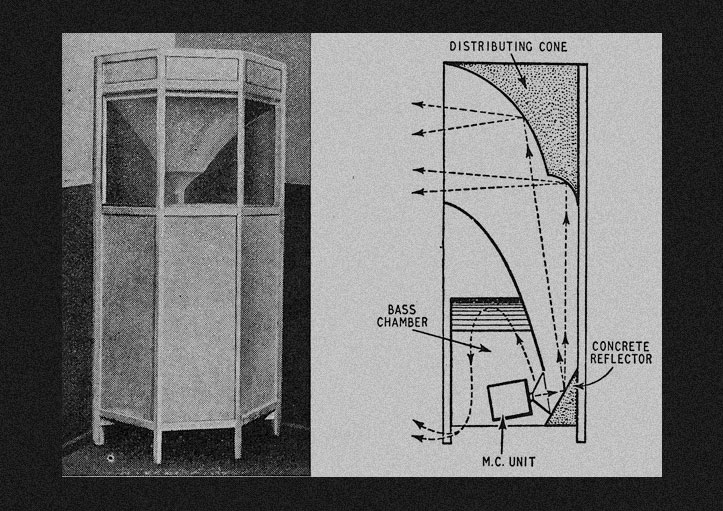
Let’s get to the point. This loudspeaker could only have been conceived and designed by a genius. Once heard there is no doubt that Paul Voigt was one. By modern standards it may look or seem a little crude. But every part of the design is mathematically precise, and calculated, to get the best from its design and all the varied materials used in its construction. Lowther have painstakingly produced modern beautiful reconstructions of the Voigt 2ft and 4ft Tractrix Horn Loudspeaker designs, but have not attempted a reconstruction of the Domestic Corner Horn for good reason. It’s so dame complicated! There are no blue prints available. Reconstruction requires the slow and total demolition of an old model to understand what is required. This is sad and counterproductive. Not only is the VDCH a product of a genius designer but also of a talented audio scientist, so existing models should be cherished.
The Material World
In the Corner Horn you will not only find timber and plywood, but also concrete and plaster of Paris. These materials have all been chosen deliberately to ensure the resulting sound is not only of the highest order but of the RIGHT NATURAL order. This loudspeaker has a sound completely different from any other loudspeaker I’ve heard, and believe me I’ve heard most of them. To get the sound he wanted Paul Voigt used these materials deliberately after what must have been much experimenting. He knew the sound he wanted and these specific materials provided it along with his accompanying complex mathematical calculations.
Seeing Is Believing, Hearing Is Revelatory
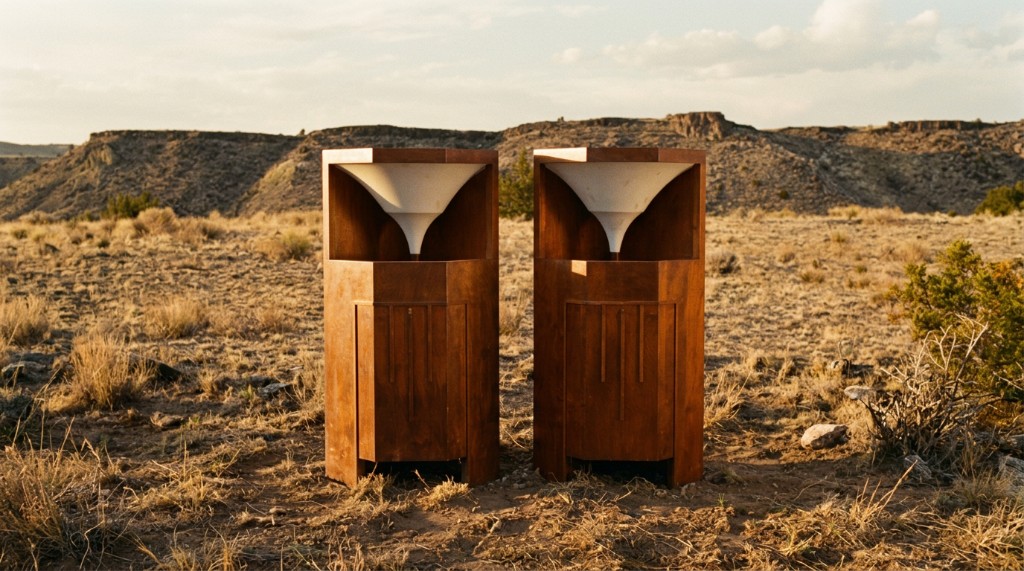
I’m not going to try and describe the utterly sublime design and construction of the Corner Horn as you need to see one (inside and out) to understand how it works. It’s a horn design cabinet with a bass chamber, a concrete reflector, and a Tractrix curve plaster of Paris throat horn. This horn gives the loudspeaker a mouth area in excess of 15 square feet. The speaker is designed to be used in the corner of a room for maximum musical performance. The sound is an utter revelation.
Uncanny
Designed originally as a mono loudspeaker, in a stereo pair they literally sing. When I first heard a pair courtesy of John Howes (The Lowther/Voigt Museum) I was shocked. I was not prepared to hear how they sounded. Completely unlike any loudspeaker I’d heard before. The sound was huge. All instruments and voices sound so natural, transparent and fast. Above all the sound is effortless with a sense of ease. You get the feeling you are listening to sound that’s just there. It doesn’t sound reproduced in any way. With this speaker hearing really is believing. It stopped me dead in my tracks…..
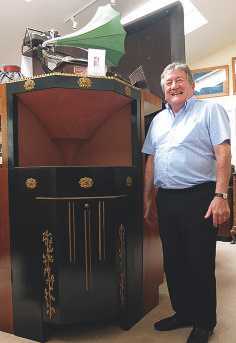
John Howes with an original Voigt corner horn. Hi-Fi News, December 2020.
The Sound
In other words it is almost like real sound, with real music naturally reproduced without a hint of the equipment used to reproduce the sound or music. Uncanny is the only word to describe it. I can only wonder what Voigt’s customers made of the sound back in the 1930’s. It must have been a revelation given that most people listened to music via a windup gramophone or at best a good wireless. Voigt sold the speaker equipped with his fabulous field coil driver and the design proved successful with the more discerning (and wealthy) public as well as with the BBC who acquired a number of units. Voigt offered a Rolls Royce service for his RR product. The design is just as powerful in the modern age as it was back in the 1930’s. Klipsch and others have tried to emulate the sound with their own versions of corner horns but as far as I’m personally concerned (as good as they are) the original reigns supreme. It’s in a league of its own.
The Modern Approach
These nearly 100 year old speakers are much sort after today. Both collectors of vintage equipment and those seeking the ultimate sound reproduction vie for the few remaining secondhand examples. The Lowther/Voigt museum tries to keep track of all the remaining pairs (and even single speakers) linking them with their current owners where possible. Modern owners use them of course in stereo pairs and Lowther drivers (both field coil and permanent magnet) are always the natural and preferred form of sound reproduction.
The Voigt Memory
John Howes tried unsuccessfully to resurrect the design with his Voigt Memory reproduction but the cost and complexity of reproduction proved far too great even for John. He has acquired for his museum many of the original examples in various conditions. I know of several proud owners of vintage and refurbished original pairs. Good condition pairs rightly fetch big price tags, such is the quality and amazing sound. If not driven by original (often refurbished) Voigt field coils their owners often favour the new Lowther field coils which is by far and wide the best choice of driver for this grande dame of sound reproduction. Failing this the PM4A and even the PM2A prove a popular, more economical, choice of driver especially those drivers from the Lowther Sinfonia or Philharmonic ranges. Paired with appropriate quality low powered amplification (see my previous article) audio nirvana is to hand. I personally think the nearest approximate Lowther speaker (due to its corner position and rear firing drive unit) is the Acousta Quarter Wave which gives a small taste of the natural sound of the mighty Voigt Domestic. Which brings me to……….
The Howes Quarter Wave Loudspeaker
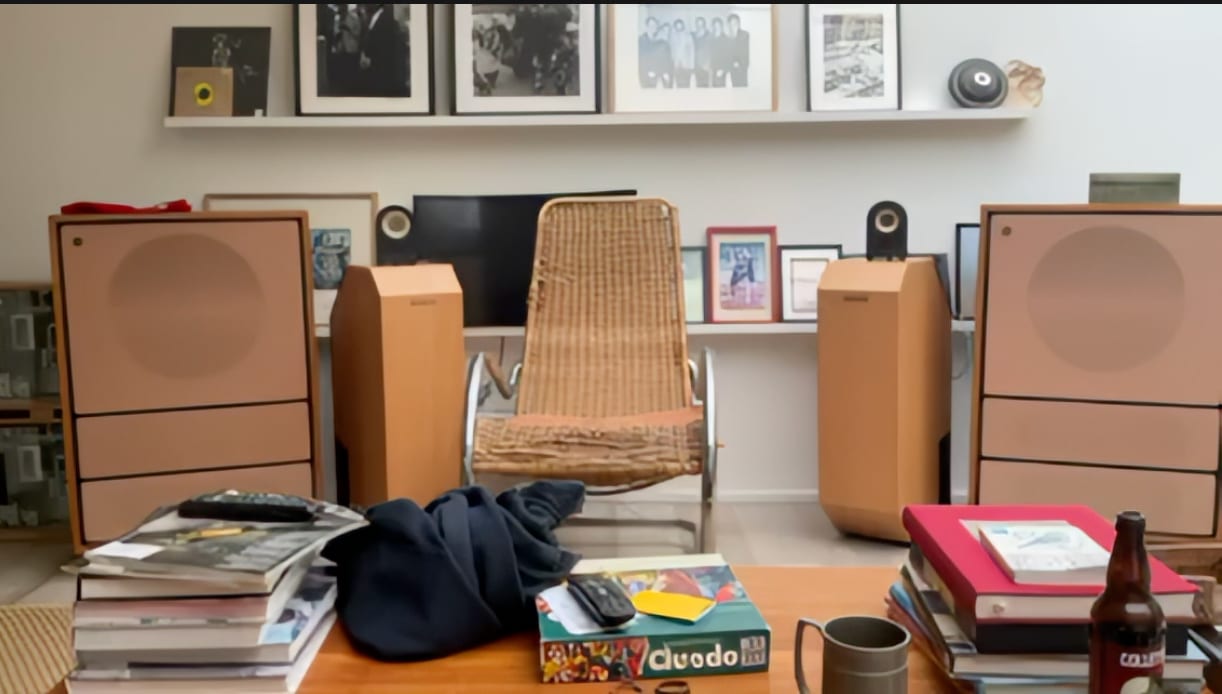
On hearing the Voigt Domestic Corner Horn I was smitten with the sound signature. I could not understand why no modern speaker could ever replicate its very natural and spacious presentation. John Howes puts a great deal of this down (but not all) to the Voigt innovations of the single full range driver, the lack of crossover, the Voigt bass chamber and the use of the Tactrix reflector in the throat of the speaker. He is also a fan of corner positioning. I asked John how I could get an approximation of this sound without investing in a descent costly pair of vintage Voigts. His response was to come up with his own Voigt Quarter Wave loudspeaker resplendent with a Tulip wood reflector. The design incorporates many of the Voigt innovations. I got a little involved in the design and his end result has remained my own favourite domestic speakers for more years than I care to remember. Even my wife approves of what is a very domestically acceptable design.
Baby Voigt Domestic
Is it a baby Voigt Domestic? NON. It can’t reproduce that uncanny ethereal sound quality of the original (much more complex) design, but it does give me a good taste of best loudspeaker ever made. With the right matching amplification and room positioning I’m much nearer to the VDCH experience than any modern speaker design can provide. And for that I’m thankful not only to John Howes but the genius who was Paul Voigt. He remains one of the small number of people I regard as an audio hero.
Where Can You Hear a VDCH Speaker
Back in the day a lot of audio/speaker manufacturers bought and owned a VDCH, such was its importance to the science of reproduction. These days unless you are lucky enough to know someone who has a pair I can only suggest a visit to the private Lowther/Voigt museum in East Sussex, UK. Visits are strictly by pre-8arrangement and by personal invitation of proprietor John Howes. The website for the museum contains some fascinating information about the VDCH design but like all things Audio “hearing is believing”.
As I hinted at the beginning of this article if you are a lover of the reproduction of sound you owe it to yourself to hear the VDCH at least once in your lifetime. You may lose all preconceptions as to the correct sound of recorded music. I’ll guarantee it’s like no other sound you’ll ever experience. You must definitely hear it before you die……….
Mike Blackmore
Voigt and Lowther aficionado
News roundup
Out in the hi‑fi world
- 01
Classical music
Richard Strauss: An Alpine SymphonyVasily Petrenko and the Royal Philharmonic Orchestra have a new recording of Strauss's An Alpine Symphony, on Harmonia Mundi, released 30 October 2026. The performance's orchestral scale and dynamics connect to this week's PX4 and Edilia Pick of the Week.
- 02
Jazz / vinyl
Jan Garbarek: RitesECM has issued Jan Garbarek's Rites on vinyl for the first time, a two-LP Luminessence edition released 16 October 2026.
- 03
Audiophile vinyl
The Beach Boys: Pet SoundsHi-Fi News covers a Slow Down Sounds One-Step mono edition of Pet Sounds, sourced from the 1972 Reprise master.
Pick of the Week
Lowther PX4 Valve Amplifier
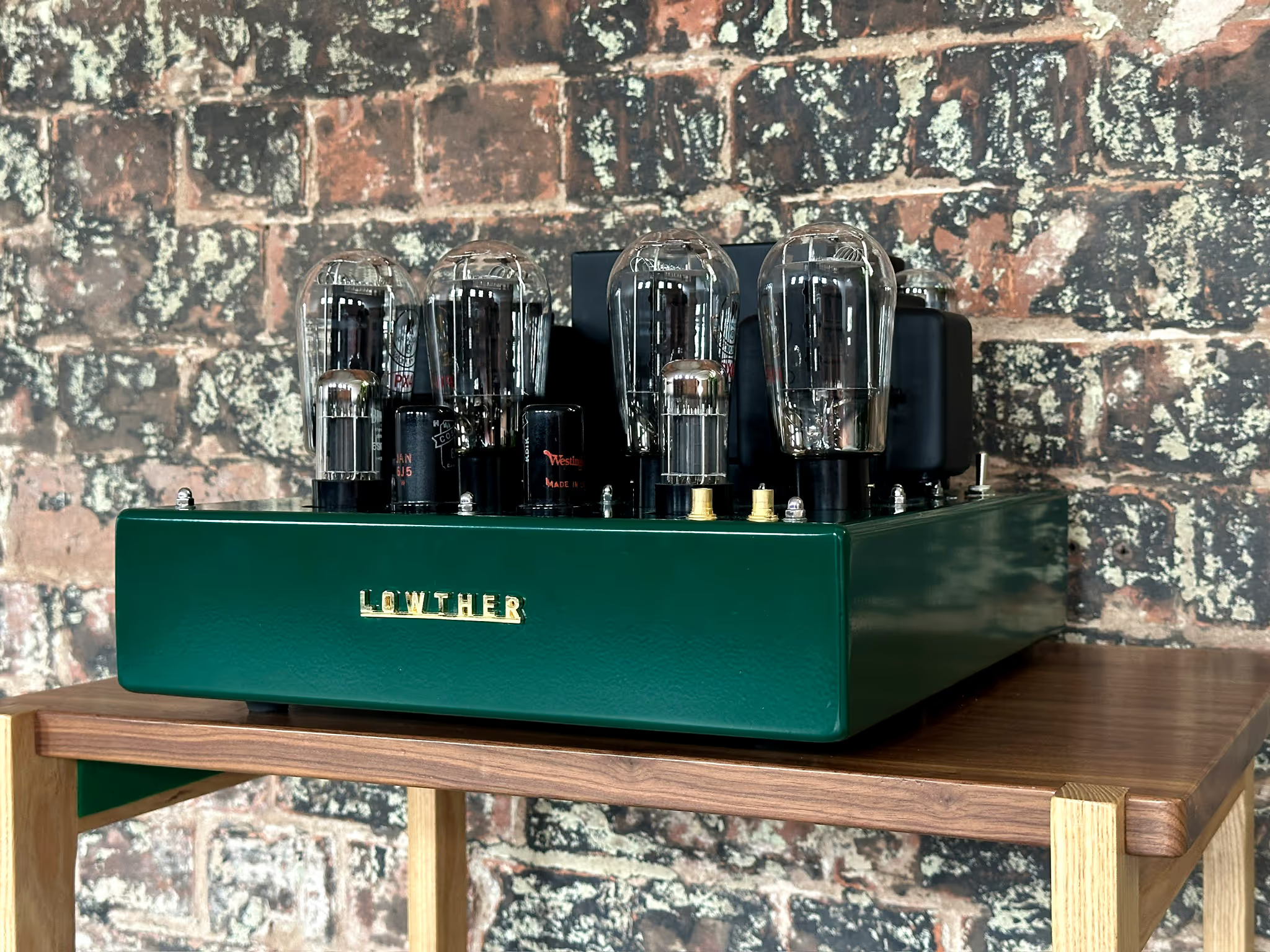
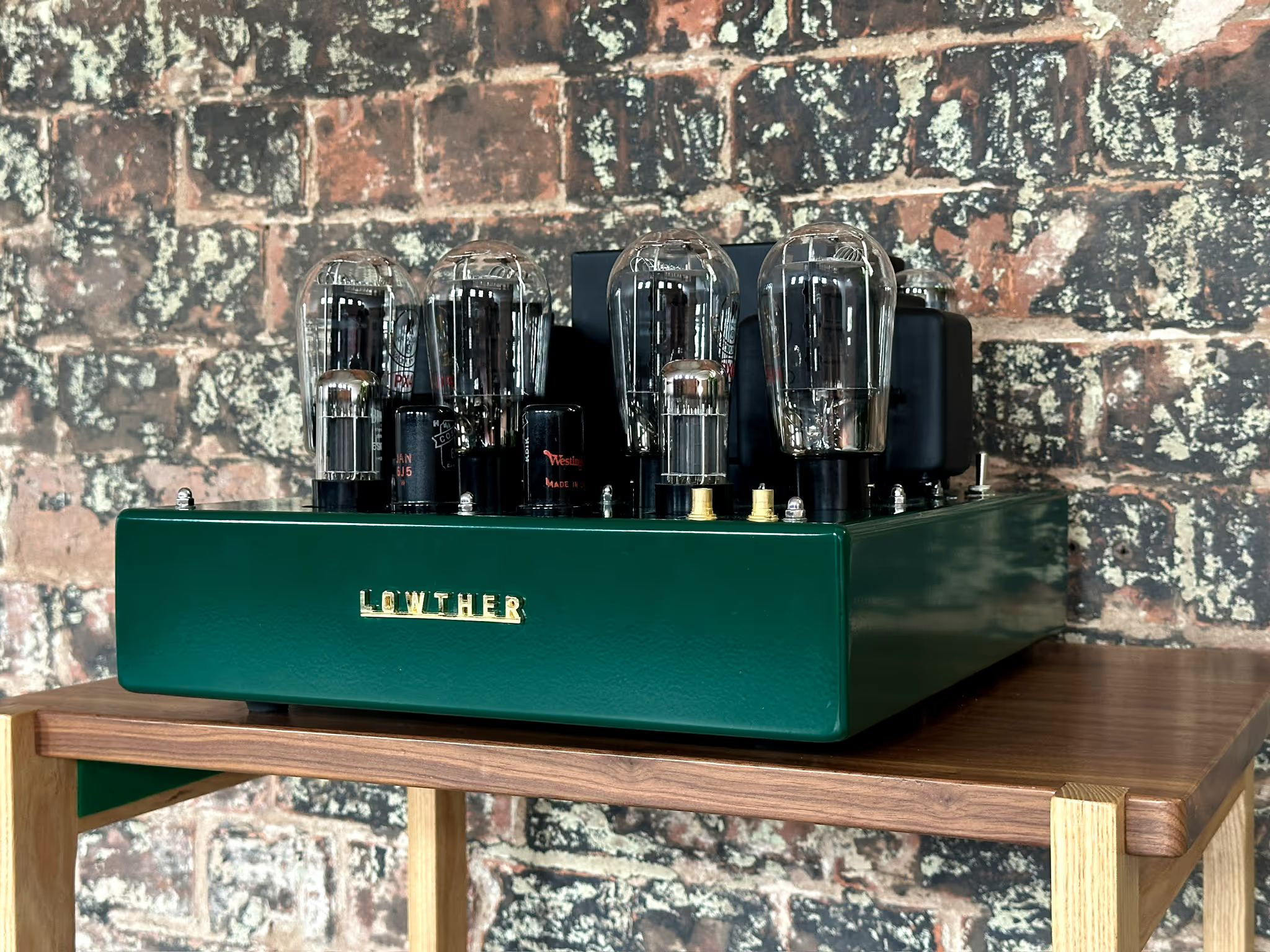
Paired with a set of Lowther Edilia loudspeakers, the PX4 delivers a fantastic reproduction of the Royal Philharmonic Orchestra performing Richard Strauss's An Alpine Symphony.
From the quieter passages to the full force of the orchestra, the PX4 and Edilia combination brings out the scale, detail and dynamics of the performance.
A reminder that it's not simply about power. It's about how convincingly a system can reproduce music.